Introduction
There’s an undeniable allure to a perfectly roasted prime rib, a centerpiece that promises luxury and flavor. Many home cooks, however, shy away from this magnificent cut, fearing complexity. But what if we told you that achieving a show-stopping boneless prime rib, with a beautifully caramelized crust and a succulent, rosy interior, is simpler than you imagine? This recipe demystifies the process, guiding you to a spectacular meal with minimal fuss, transforming a holiday dinner or special occasion into an unforgettable culinary experience.
Ingredients

Gathering quality ingredients is the first step to a memorable roast. For this recipe, we prioritize freshness and flavor.
* 4-5 pound boneless prime rib roast, well-marbled
* 2 tablespoons olive oil, or avocado oil
* 4 cloves garlic, minced
* 2 tablespoons fresh rosemary, finely chopped
* 1 tablespoon fresh thyme, finely chopped
* 1 tablespoon coarse sea salt
* 1 teaspoon freshly cracked black pepper
Step-by-Step Instructions
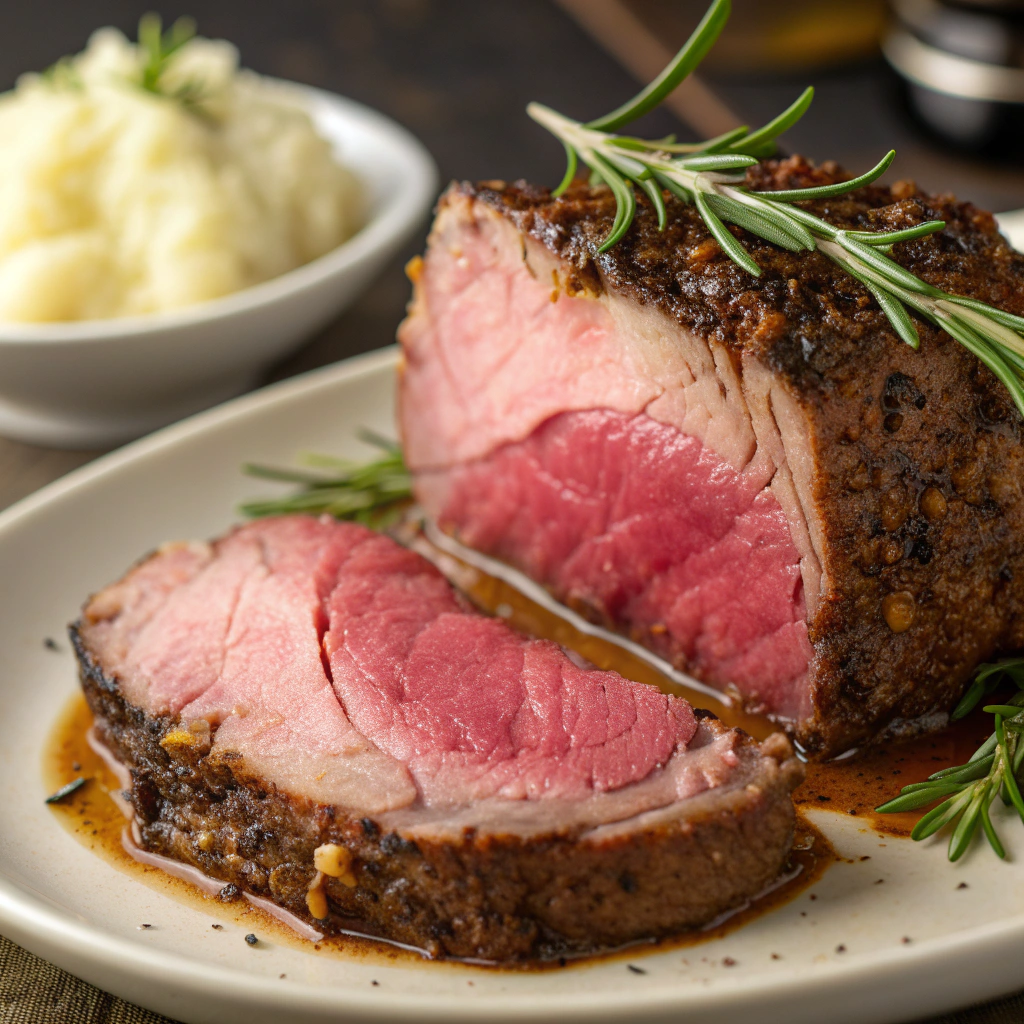
Follow these steps for a prime rib that will impress even the most discerning palates.
1. Bring to Room Temperature: Remove the prime rib from the refrigerator at least 2-3 hours before cooking. This crucial step allows the roast to cook more evenly, preventing a grey outer ring and ensuring a consistent pink from edge to edge.
2. Prepare the Rub: In a small bowl, combine the olive oil, minced garlic, chopped rosemary, chopped thyme, sea salt, and black pepper. Mix thoroughly to create a fragrant paste.
3. Season the Roast: Pat the prime rib completely dry with paper towels. This promotes a superior crust. Generously rub the herb-garlic mixture all over the surface of the roast, ensuring an even coating. Let it sit for at least 30 minutes, or up to an hour, allowing the flavors to penetrate.
4. Preheat Oven & Sear: Preheat your oven to a scorching 450°F (232°C). Place the prime rib, fat-side up, directly onto a rack in a roasting pan. Roast for 15 minutes at this high temperature. This initial blast of heat creates that coveted, flavorful crust.
5. Lower Temperature & Roast: After 15 minutes, reduce the oven temperature to 325°F (160°C) without opening the oven door. Continue to roast until your desired internal temperature is reached. For rare, aim for 120-125°F (49-52°C); medium-rare, 130-135°F (54-57°C); medium, 135-140°F (57-60°C). Use a reliable meat thermometer inserted into the thickest part of the roast, avoiding bone.
6. Rest, Rest, Rest: This is arguably the most vital step! Once the roast reaches your desired temperature, remove it from the oven and transfer it to a cutting board. Tent it loosely with foil and let it rest for a minimum of 20-30 minutes. This allows the juices to redistribute throughout the meat, resulting in an incredibly tender and moist roast. Skipping this step leads to dry meat.
7. Slice and Serve: Carve the prime rib against the grain into thick slices. Serve immediately with any pan drippings or your favorite accompaniments.
Expert Tips
* Invest in a Meat Thermometer: A good quality, leave-in probe thermometer is your best friend for prime rib. It takes the guesswork out of achieving perfect doneness every time.
* Don’t Peek: Resist the urge to open the oven door frequently. Every time you open it, heat escapes, extending cooking time and impacting consistency.
* The Power of Resting: Seriously, do not skip the rest. It’s non-negotiable for a juicy roast. Patience here will be rewarded tenfold.
* Pan Drippings: While the roast rests, you can deglaze the roasting pan with a bit of beef broth or red wine to create a simple, rich au jus.
* Carve Against the Grain: Look at the muscle fibers; slicing perpendicular to them shortens the fibers, making each bite more tender and enjoyable.
Variations
While this simple recipe is outstanding, don’t hesitate to personalize it.
* Herb Boost: Experiment with different fresh herbs like marjoram or sage in your rub for a unique aromatic profile.
* Spicy Kick: Add a pinch of cayenne pepper or smoked paprika to the rub for a subtle warmth and depth of flavor.
* Compound Butter: Before roasting, spread a layer of compound butter (butter mixed with minced garlic, herbs, and shallots) under the fat cap for an extra layer of richness and flavor as it melts into the meat.
* Mustard Coating: A thin layer of Dijon mustard applied before the rub can add a tangy complexity and help the crust form beautifully.

Conclusion
Creating an exquisite boneless prime rib doesn’t require a culinary degree or hours of complicated work. With a few simple steps, a good meat thermometer, and a bit of patience during the crucial resting period, you can achieve a dish that speaks volumes about your skill and generosity. This recipe is your reliable guide to a perfectly roasted, tender, and incredibly flavorful prime rib that will undoubtedly become a cherished tradition in your home. Enjoy the process, savor the aromas, and delight in the impressive results! Happy cooking from BoastRecipes!